
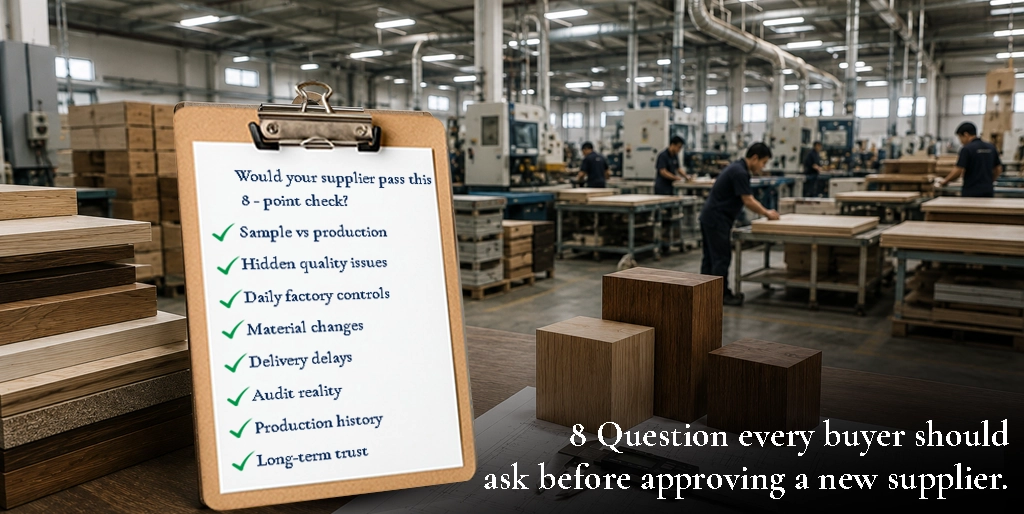
Interacting with a new supplier is one of the easiest parts of discussing the requirements of a business’s needs. The sample arrives exactly as expected. The team that is in production provides answers to every question with confidence, and the factory visit provides a memorable impression. At that moment, approving the new supplier feels like the right decision for the business.
Months later, the conversation often changes. A shipment arrives behind schedule. The finish on one production batch doesn’t match the approved sample. Due to a minor gap in communication, starting delaying decisions, and suddenly the buying team is spending more time solving factory issues than planning the next season. If you look back then, we have warning signs from the beginning. Due to the promise, they didn’t participate in communication.
For this reason, experienced procurement teams avoid common supplier evaluation mistakes by looking beyond presentations and quotations. Many also follow a structured supplier audit program to understand how a factory performs once production becomes routine, pressure increases, and unexpected situations appear.
1. Can You Produce the Same Quality at Full Production Scale?
Table of Contents
One polished sample rarely tells the full story. Almost every factory can dedicate extra time to producing a single approval piece. Skilled operators are assigned to the job, supervisors keep a close watch, and every small imperfection is corrected before the sample reaches the buyer.
Production doesn’t work like that. Once manufacturing moves to thousands of units, different operators take over, multiple production lines start running, and materials arrive in separate batches. That’s when consistency becomes much harder to maintain.
We’ve seen factories deliver outstanding samples while struggling to reproduce the same finish only weeks later. The problem wasn’t capability. It was the absence of quality control monitoring systems that kept quality stable from one batch to the next.
Before approving a new supplier, understand what quality control monitoring remains in place after the sample has already been approved. The answer usually says more about long-term reliability than the sample itself.
2. What Happens When Production Doesn’t Meet Quality Standards?
No factory avoids problems forever. Materials behave differently from one batch to another. Operators make mistakes. These situations are part of manufacturing, regardless of the industry. The interesting part isn’t whether problems occur or not.
As a result, some factories neglect the issue while others investigate and reach the root cause and take preventive steps to avoid mistakes in the next session.
From a buyer’s perspective, those two responses create completely different levels of risk. A new supplier with a disciplined quality process often recovers from problems without affecting delivery commitments. A new supplier relying on temporary fixes usually creates larger issues that become visible much later, sometimes after the products have already reached the customer.
3. Who Is Watching Quality While Production Is Still Running?
Many buyers focus heavily on the final inspection. By then, most of the manufacturing cost has already been invested. If defects are discovered at that stage, the options become limited. Production may need rework, shipments can be delayed, and delivery schedules quickly come under pressure. Factories with mature production systems think differently.
Quality control monitoring is checked throughout manufacturing rather than waiting until everything is complete. Small issues are identified while they are still inexpensive to correct, preventing larger problems from building across the production line. During factory visits, it’s often worth paying attention to what happens between the first machine and the packing area.
Are supervisors actively reviewing production? Are inspection records updated during manufacturing? Does every production line follow the same routine? Those everyday practices usually reveal far more than a presentation in the meeting room.
4. How Do You Manage Changes in Raw Material in New Suppliers?
A new supplier may never mention that the material used for your second order came from a different source than the first. Sometimes it’s because prices increase. Sometimes the original vendor runs out of stock. Occasionally, the factory finds another new supplier that can deliver faster. These decisions happen more often than buyers realise, especially when production schedules are tight.
The real concern isn’t that materials change. It is whether those changes are treated as routine purchases or controlled production decisions. Factories with disciplined manufacturing practices don’t replace materials overnight. They compare specifications, test samples, and check whether the new material performs the same way before it reaches the production line. That extra step protects consistency, even when their own supply chain changes.
If a new supplier struggles to explain its vendor audit and compliance process clearly, it may be worth understanding how often material substitutions happen and who approves them.
5. Can You Show Performance From Previous Production Runs?
Every supplier has a presentation. Not every supplier has a history they are comfortable discussing. A sales meeting naturally focuses on future capabilities. Production capacity, certifications, and quality systems all sound reassuring. But experienced buyers often become more interested in what happened six months ago than in what might happen next month.
Did repeat customers continue placing orders? Were deliveries made on time during peak production periods? How were quality concerns handled when they appeared?
Answers to those supplier audit program questions are difficult to rehearse because they come from real operations, not marketing material. Looking at previous production performance also helps buyers separate isolated success from consistent execution. One successful order proves capability. A long record of repeat business proves reliability.
6. What Happens When Production Falls Behind Schedule?
Production delays rarely arrive without warning. In most factories, they begin quietly.
A raw material shipment reaches the factory two days late. One machine requires unexpected maintenance. Customer approvals take longer than planned. None of these situations seem serious on their own.
The challenge is that manufacturing doesn’t stop while those delays accumulate. A few lost hours on Monday can easily become several lost days by the time production reaches the packing department. Suddenly, container bookings need to be changed, shipping schedules move, and retailers begin adjusting inventory plans.
7. How Does Your Factory Prepare for Customer Audits?
Factory audits reveal much more than compliance. They show how a business operates when someone starts asking uncomfortable questions. During an audit, buyers aren’t only checking certificates or production records. They notice whether departments share the same information, whether quality documents are easy to trace, and whether supervisors explain processes with confidence or keep looking for answers.
One pattern becomes obvious after visiting multiple factories. Businesses that treat audits as a once-a-year event often spend weeks preparing for them. Documents are updated at the last minute, production areas receive extra attention, and teams rehearse responses before customers arrive.
8. Why Should We Trust You With Long-Term Production?
This question rarely receives a direct answer. Instead, the answer is hidden in everything the supplier has already shared. Did they explain how production is controlled, or did every conversation return to pricing? Were they comfortable discussing previous production challenges, or did they avoid the subject altogether? Could they support their claims with examples, or were most responses built around promises?
Trust is rarely created by one impressive meeting. It grows when buyers see the same standards repeated across different areas of the factory—quality, planning, communication, documentation, and production management all telling the same story. The suppliers that earn long-term partnerships are not always the cheapest or the fastest. More often, they are the ones whose daily operations remain consistent even when production becomes difficult.
Conclusion
Approving a supplier is rarely a decision that affects just one purchase order. It influences production schedules, inventory planning, customer satisfaction, and the confidence buyers have in every shipment that follows. While pricing, samples, and factory presentations play an important role, they rarely tell the complete story.
At Global Base, supplier evaluations are built around understanding how factories perform in everyday manufacturing conditions, not just during initial discussions. By looking beyond quotations and sample approvals, procurement teams can reduce uncertainty, strengthen supplier relationships, and make decisions that continue delivering value long after production begins.